

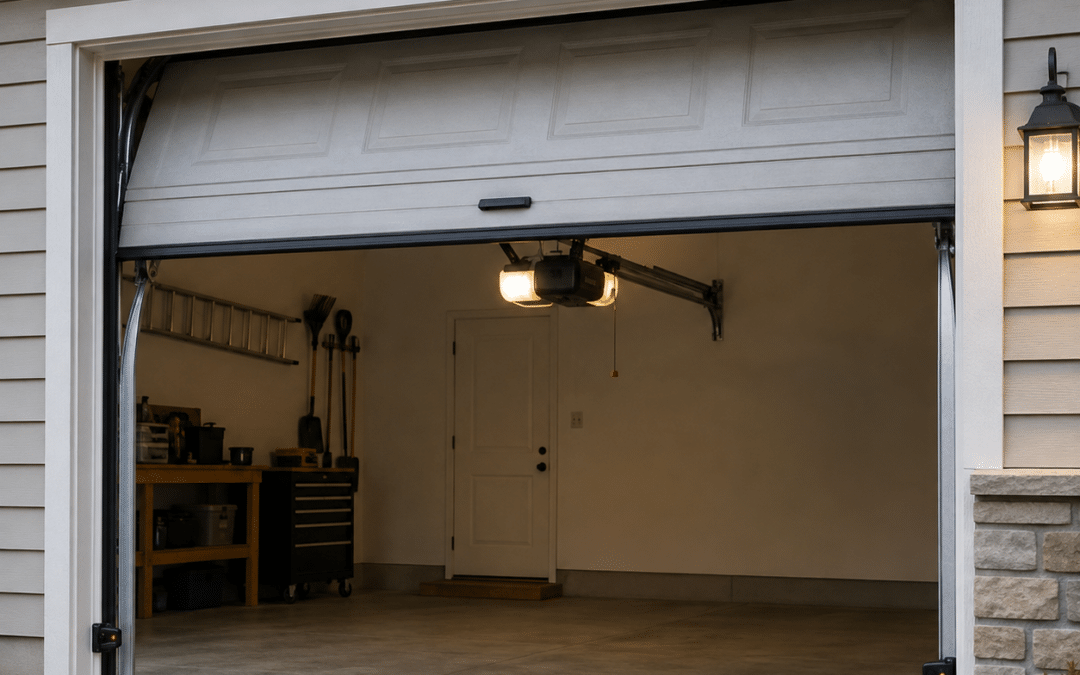
You press the button, your garage door starts to close, gets almost to the floor, and then suddenly reverses and opens again. It can be frustrating, especially when you are trying to leave the house or secure the garage for the night.
When a garage door closes then opens, the system is usually reacting to something that it believes is unsafe or preventing the door from completing its normal closing cycle. Sometimes the cause is simple, such as a blocked safety sensor. Other times, the problem may involve the opener settings, tracks, rollers, springs, or door balance.
At Unwin Overhead Doors, we help homeowners throughout Western Massachusetts troubleshoot and repair garage doors that will not operate properly. Here are the most common reasons a garage door reverses after closing and what you can safely check before calling for service.
1. The Safety Sensors Are Blocked or Misaligned
The safety sensors are one of the first things to check when a garage door will not stay closed.
Most modern garage door systems have two small photo-eye sensors located near the floor on either side of the door opening. They send an invisible beam across the doorway. If something interrupts that beam, the opener is designed to reverse the door rather than risk closing on a person, pet, vehicle, or object.
Common sensor problems include:
- Dirt or dust covering the sensor lens
- Leaves, tools, boxes, or toys blocking the beam
- One sensor being bumped out of alignment
- Loose wiring
- Moisture or condensation on the lens
- A damaged sensor
Look at the indicator lights on both sensors. They should typically remain steady when properly aligned. If one is blinking or dark, there may be an alignment, wiring, or sensor issue.
You can safely wipe the lenses with a clean, soft cloth and remove anything blocking the opening. If the sensors still will not align, professional garage door repair may be needed.
2. Something Is Obstructing the Door
The safety sensors are not the only feature designed to prevent a garage door from closing on an obstruction.
Modern openers also monitor resistance. If the door encounters too much resistance while closing, the opener may automatically reverse.
Check the area around the bottom of the door for:
- Small rocks
- Ice or packed snow
- Leaves and debris
- Tools
- Extension cords
- Toys
- Storage items
- Damage to the bottom seal
Even a relatively small object can prevent the door from reaching its fully closed position.
During a Massachusetts winter, snow and ice buildup around the threshold can also interfere with normal operation. Clear the area carefully and try the door again.
If the door continues reversing even with a clear opening, another issue may be causing excessive resistance.
3. The Opener Travel Limits Need Adjustment
Your garage door opener needs to know exactly how far the door should travel before it reaches the floor. These settings are often referred to as travel limits.
If the downward travel limit is set too far, the opener may try to push the door beyond the floor. When it encounters resistance, the system may interpret that as an obstruction and reverse the door.
Signs of a travel-limit problem may include:
- The door reaches the floor before reversing
- The garage door immediately opens again after touching down
- The problem developed after opener service or installation
- The door otherwise moves smoothly
Travel settings vary depending on the opener model. Some newer systems use electronic controls, while others have manual adjustment settings.
If you are unsure how your opener is configured, it is better to have the system inspected than to repeatedly adjust settings without knowing the underlying cause.
Unwin also provides professional garage door opener installations if your current opener is older, unreliable, or repeatedly causing problems.
4. The Garage Door Is Out of Balance
A properly balanced garage door should move smoothly without the opener having to fight against the weight of the door.
Springs counterbalance much of that weight. When springs become worn or lose tension, the door may become harder to move. The opener can detect that resistance and reverse as a safety measure.
Signs of a balance problem include:
- The door looks uneven
- One side moves faster than the other
- The opener sounds strained
- The door feels unusually heavy
- The door shakes while moving
- The door will not remain in position when operated manually
- The door stops or reverses at similar points each time
If you suspect a spring or balance issue, do not attempt to adjust the springs yourself. Garage door springs operate under significant tension.
Have the system inspected by a professional before continuing to operate the door.
5. Tracks or Rollers Are Creating Resistance
Your garage door rollers travel through metal tracks on both sides of the opening. If a track is bent or a roller becomes worn, damaged, or misaligned, the door may encounter resistance as it closes.
That resistance can cause the opener’s safety system to reverse the door.
Look for warning signs such as:
- Scraping or grinding noises
- Jerky movement
- Worn or damaged rollers
- A visible bend in the track
- Loose track brackets
- The door shaking while closing
- One side of the door moving differently from the other
Do not force the door if it appears to be off track or significantly misaligned. Continuing to operate it could damage the tracks, rollers, cables, panels, or opener.
6. The Close-Force Setting May Be Incorrect
Garage door openers also use force settings to determine how much resistance is acceptable during operation.
If the close-force setting is too sensitive, normal resistance from the door may cause the opener to reverse before the door reaches the floor.
However, increasing the force should not be treated as a simple workaround. Excessive force can interfere with the safety features designed to prevent the door from closing on an obstruction.
If the force setting suddenly seems incorrect, the real problem could be:
- Worn rollers
- Poor door balance
- Track issues
- Spring problems
- Opener wear
A technician can inspect the entire door before determining whether the opener settings actually need adjustment.
7. The Garage Door Opener May Be Failing
If the sensors, tracks, rollers, and door balance all appear normal, the opener itself could be the problem.
Garage door openers contain motors, gears, electronic controls, sensors, and other components that wear over time.
Possible opener symptoms include:
- Intermittent operation
- Clicking or humming
- Unexplained reversing
- Delayed response
- Flashing opener lights
- Remote or wall control problems
- Increasingly noisy operation
- A door that stops at inconsistent points
If your opener is older and experiencing multiple problems, replacing it may make more sense than continuing to repair individual components.
Read 5 Signs Your Garage Door Opener Is About to Fail for additional warning signs.
Homeowners interested in connected technology can also explore Unwin’s Smart Home garage door options.
What Can You Safely Check Yourself?
If your garage door closes then opens, there are several simple checks you can perform without working on the mechanical system.
Try the following:
- Remove anything blocking the garage door opening.
- Wipe the safety sensor lenses.
- Confirm both sensors appear aligned.
- Clear leaves, snow, or ice from the bottom of the door.
- Look for obvious damage to the tracks or rollers.
- Listen for grinding, scraping, or unusual opener noises.
Avoid adjusting springs, cables, or other high-tension hardware yourself.
If the door looks crooked, feels unusually heavy, or has a broken cable or spring, stop operating it.
When Should You Call a Garage Door Professional?
Call for professional service if:
- The sensors remain misaligned
- The door repeatedly reverses
- The tracks appear bent
- Rollers are damaged or out of place
- The garage door is crooked
- The opener strains or makes unusual noises
- A spring or cable appears damaged
- The door cannot be securely closed
A garage door that reverses repeatedly is telling you that something is interfering with normal operation. Finding the underlying cause is safer than repeatedly pressing the opener and hoping the problem goes away.
If your garage cannot be secured because the door will not stay closed, Unwin also provides 24-hour emergency garage door service.
Get Your Garage Door Closing Properly Again
When a garage door closes then opens, the cause can range from something as simple as a dirty safety sensor to a more serious problem with the opener, springs, tracks, or door balance.
Start with the basic checks you can safely perform. If the problem continues, a professional inspection can identify what is causing the door to reverse and help prevent further damage to the system.
Unwin Overhead Doors provides garage door repair, opener service, installation, and emergency service throughout Western Massachusetts.
Contact Unwin Overhead Doors or call (413) 598-8844 to schedule garage door service.
Recent Comments