

Your garage door is likely the largest moving object in your home. On average, it cycles (opens and closes) over 1,500 times a year. Without proper care, the intense mechanical stress, combined with the unpredictable New England weather, can lead to noisy operation, expensive breakdowns, and premature failure.
Learning how to maintain your garage door for longevity and performance doesn’t just save you money on emergency repairs; it ensures your home stays secure and your family stays safe.
Follow this comprehensive guide to keep your system running like new for decades.
1. Perform a Monthly Visual Inspection
Before you pick up a wrench, start with your eyes and ears. A simple “look and listen” test once a month can catch a minor issue before it turns into a snapped cable or a burned-out motor.
- Listen for Noises: Do you hear scraping, grinding, or loud “pops”? These are early warning signs of friction or worn bearings.
- Inspect Hardware: Look at the springs, cables, rollers, and pulleys for any signs of fraying, rust, or lopsided wear.
- Check the Tracks: Ensure the vertical and horizontal tracks are clear of debris and haven’t become bent or misaligned.
2. Master the Art of Lubrication
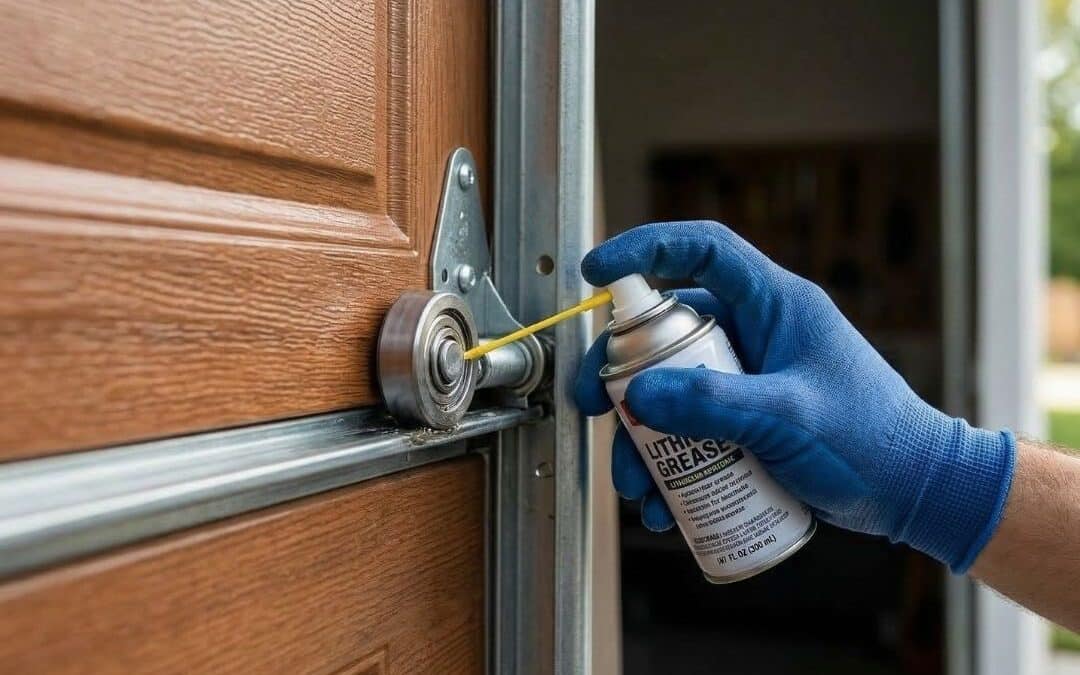
Friction is the primary enemy of mechanical longevity. Keeping the moving parts of your door lubricated reduces the strain on your opener and quiets down a noisy garage door.
- Use the Right Product: Only use a specialized silicone-based or white lithium grease. Never use WD-40, as it is a cleaner that can actually strip away existing protective lubricants.
- Target Key Areas: Focus your spray on the rollers (the bearings inside), hinges, metal tracks, and the full length of the torsion or extension springs.
- Wipe the Excess: A thin, even coat is all you need. Excessive grease can actually attract dust and grit, leading to clogs.
3. Test the Balance and Alignment
An unbalanced door is a heavy door. If your springs aren’t providing enough “lift,” your garage door opener has to work twice as hard, significantly shortening its lifespan.
- The Balance Test: Pull the red emergency release cord to operate the door manually. Lift the door halfway up and let go.
- The Result: If the door stays in place, it is perfectly balanced. If it crashes down or races upward, the springs are under-tensioned or over-tensioned and require a professional adjustment.
4. Tighten the Hardware
Think about the vibrations caused by a heavy door moving up and down 1,500 times a year. Over time, those vibrations loosen the nuts and bolts that hold your system together.
- Check the Brackets: Use a socket wrench to tighten the bolts on the roller brackets and the bolts that secure the tracks to the wall.
- Inspect the Hinges: Ensure the screws holding the hinges to the door panels are snug. Be careful not to overtighten, which can strip the holes in thin steel doors.
5. Verify Safety Features
Longevity is important, but safety is paramount. Modern doors are equipped with features designed to prevent property damage and injury.
- The Photo-Eye Test: While the door is closing, wave an object (like a broomstick) in front of the sensors at the base of the door. It should immediately reverse.
- The Reversal Test: Place a 2×4 piece of wood on the ground in the door’s path. When the door touches the wood, it should automatically sense the resistance and reverse direction.
The Value of a Professional Tune-Up
While these DIY steps go a long way in how to maintain your garage door for longevity and performance, there are certain tasks—like adjusting high-tension springs or replacing frayed cables—that should only be handled by a certified technician.
At Unwin Overhead Doors, we recommend a professional 20-point inspection once a year. Our team can spot “invisible” issues like hairline stress cracks in springs or worn internal opener gears before they leave you stranded.
Is your garage door due for a checkup? Contact us today or call (413) 598-8844 to schedule your annual maintenance and ensure your door performs at its peak for years to come.
Recent Comments