

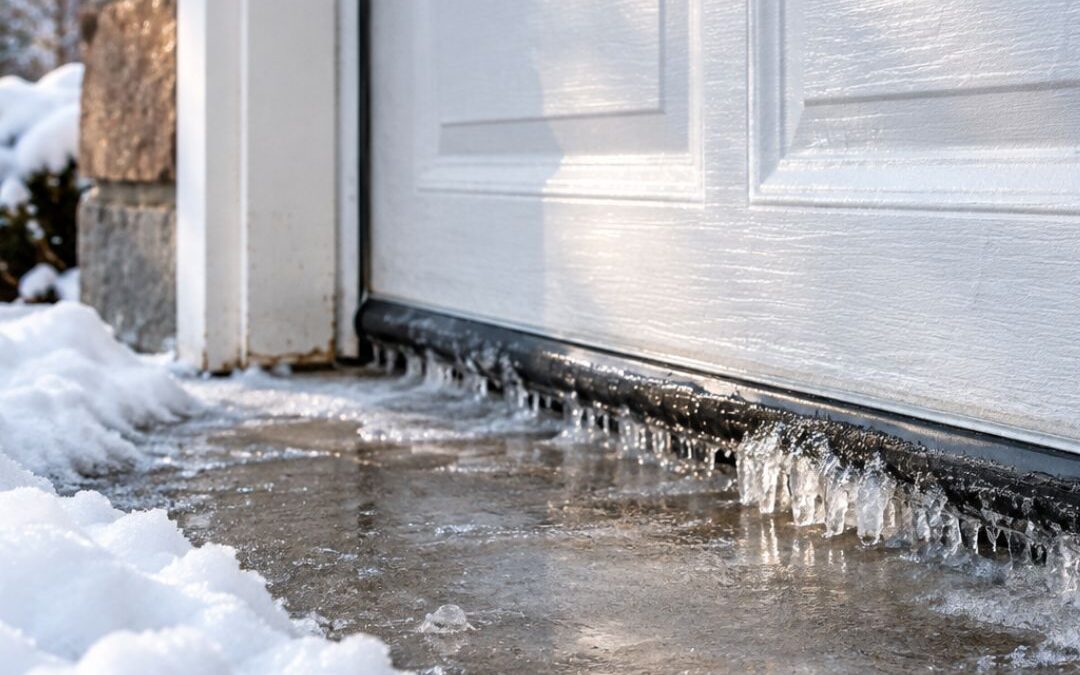
You wake up on a cold winter morning, get ready to leave for work, and discover that your garage door won’t open. You can hear the opener trying to lift the door, but nothing seems to move.
The problem may not be your garage door opener at all. Your garage door could be frozen to the ground.
Here in Western Massachusetts, fluctuating temperatures, melting snow, and overnight freezes create the perfect conditions for this problem. Although a frozen garage door may seem like a minor inconvenience, attempting to force it open can result in expensive repairs.
Understanding why your garage door freezes shut can help you address the immediate problem and prevent it from happening again.
Why Does My Garage Door Freeze to the Ground?
A garage door typically freezes shut when moisture collects around the bottom weather seal and temperatures drop below freezing. As the water turns into ice, it creates a bond between the bottom of the garage door and the concrete floor.
Several factors can contribute to this problem.
Melting Snow From Your Vehicle
When you park inside your garage after driving through snow or slush, accumulated snow begins melting off your vehicle.
Depending on the slope of your garage floor, this water may travel toward the garage door. As temperatures drop overnight, the water can freeze around the bottom seal.
Poor Driveway Drainage
If your driveway slopes toward your garage, melting snow and rainwater may collect directly against the door.
Even a small amount of standing water can create problems when temperatures fall below freezing.
If your garage door repeatedly freezes in the same location, poor drainage may be contributing to the issue.
Worn or Damaged Weatherstripping
The flexible weather seal along the bottom of your garage door helps keep moisture, debris, and cold air outside.
As the seal ages, it may become:
- Brittle or cracked
- Flattened
- Torn or separated
- Less flexible in cold temperatures
- Unable to maintain consistent contact with the floor
A deteriorating seal can allow water to collect beneath or around the door, increasing the likelihood of freezing.
Frequent Freeze-Thaw Cycles
Western Massachusetts winters often bring temperatures that rise above freezing during the day and drop considerably overnight.
Snow may melt during the afternoon, leaving moisture around your garage entrance. By the following morning, that moisture has frozen into a layer of ice.
These repeated temperature changes can cause garage doors to freeze shut even when there hasn’t been a recent snowfall.
Snow and Ice Buildup
Snow piled against the garage door can gradually melt and refreeze.
Ice may accumulate around the bottom seal, along the sides of the door, or near the garage door tracks, interfering with normal movement.
Keeping the garage entrance clear throughout the winter can help prevent this buildup.
How Do I Know if My Garage Door Is Frozen Shut?
A garage door that won’t open during cold weather isn’t necessarily frozen to the ground. Broken springs, opener failures, and other mechanical problems can produce similar symptoms.
Signs that your garage door may be frozen shut include:
- Visible ice along the bottom edge of the door
- The opener attempting to lift the door without success
- The bottom seal appearing stuck to the concrete
- Recent snowfall, freezing rain, or overnight temperature drops
- The door operating normally the previous day
- Standing water or frozen puddles near the garage entrance
If there is no visible ice, or you notice loose cables, damaged springs, or uneven door movement, another problem may be responsible.
What Happens if You Force a Frozen Garage Door Open?
Repeatedly pressing the garage door opener button is one of the worst things you can do when the door is frozen shut.
The opener is designed to move a properly functioning, balanced garage door. It is not designed to break through a layer of ice holding the door to the ground.
Forcing a frozen garage door open can result in:
- Torn bottom weatherstripping
- Stripped opener gears
- Excessive strain on the opener motor
- Damaged drive components
- Bent garage door panels
- Damaged hardware
What starts as a relatively simple winter problem can quickly turn into a mechanical repair.
If your garage door appears frozen to the ground, stop operating the opener until the ice has been removed.
How to Safely Open a Garage Door That’s Frozen Shut
If your garage door is frozen to the concrete, the goal is to loosen the ice without damaging the door or its components.
1. Remove Snow From Around the Door
Clear away any loose snow and slush along the bottom edge of the garage door.
Use caution when shoveling near the door to avoid scratching the panels or damaging the weather seal.
2. Gently Remove Accessible Ice
Use a plastic scraper to carefully remove accessible ice around the bottom of the door.
Avoid using metal scrapers, hammers, or sharp tools that could puncture the weatherstripping or damage the door’s finish.
Never wedge a tool underneath the garage door to pry it open.
3. Allow the Ice to Thaw
If possible, wait until temperatures rise enough for the ice to melt naturally.
If the ice cannot be removed gently and safely, contact a garage door professional rather than attempting to force the door free.
Avoid using boiling water, open flames, or high-temperature heating equipment near the garage door.
4. Check for Visible Damage
Once the ice has melted, inspect the bottom seal and surrounding areas for visible damage.
Look for torn weatherstripping, bent panels, damaged hardware, or loose cables.
If the door appears undamaged and completely free of ice, attempt normal operation while keeping the opening clear.
Stop immediately if the door continues to resist movement, makes unusual noises, or opens unevenly.
5. Remove Remaining Moisture
Once the door is functioning normally, remove any remaining water, snow, or slush from the threshold.
Otherwise, the same moisture may refreeze the next time temperatures drop.
How to Prevent Your Garage Door From Freezing to the Ground
If your garage door freezes shut regularly, simply removing the ice each morning isn’t a long-term solution.
Addressing the source of the moisture can help prevent recurring problems.
Keep the Garage Door Threshold Dry
Sweep away melting snow, slush, and standing water before closing your garage door at night.
This is particularly important after parking a snow-covered vehicle inside the garage.
Replace Worn Weatherstripping
Inspect the bottom garage door seal periodically for cracks, tears, gaps, and signs of deterioration.
A properly fitted, flexible weather seal can help reduce moisture entering the garage and improve protection against cold drafts.
If your existing seal has hardened or become damaged, professional replacement may be worthwhile.
Improve Drainage Around Your Garage
Pay attention to where water travels during periods of melting snow or heavy rain.
If water consistently pools against your garage door, you may need to address the slope of your driveway, garage floor drainage, or nearby gutter downspouts.
Preventing water from collecting at the garage entrance is one of the most effective ways to reduce recurring freezing problems.
Use Appropriate Weather Seal Maintenance Products
Some garage door manufacturers recommend compatible silicone-based products to help maintain the flexibility of certain weather seals and reduce sticking.
Always follow the manufacturer’s recommendations before applying products to rubber or vinyl weatherstripping.
Avoid petroleum-based products or harsh chemicals unless specifically approved for your garage door materials.
Be Careful With Road Salt
While road salt can help melt ice, repeated exposure to deicing chemicals may contribute to corrosion and deterioration of certain garage door materials.
Avoid allowing salt and salty slush to accumulate directly against the bottom of your garage door.
Schedule Preventive Garage Door Maintenance
Regular maintenance can help identify worn seals, damaged rollers, alignment issues, and other concerns before winter conditions make them worse.
For additional seasonal maintenance tips, read our 7-Step Western MA Winter Garage Door Checklist.
Why Does My Garage Door Keep Freezing in the Same Spot?
If your garage door repeatedly freezes in one particular area, there may be an underlying issue with the floor, seal, or drainage.
Common causes include:
- A low spot in the concrete where water collects
- An uneven garage floor
- Damaged weatherstripping
- Water running toward the garage from the driveway
- A gap between the bottom seal and the concrete
- Melting snow draining from parked vehicles
Take note of where ice forms and where water collects during warmer parts of the day.
Identifying the source of the moisture can help determine whether the solution involves garage door maintenance, weather seal replacement, or drainage improvements.
Will an Insulated Garage Door Prevent Freezing?
An insulated garage door can help reduce heat transfer and maintain more consistent temperatures inside your garage.
However, insulation alone will not prevent the door from freezing to the ground.
If moisture continues collecting beneath the bottom seal and temperatures at the threshold drop below freezing, ice can still form.
For better winter performance, consider a combination of:
- An insulated garage door
- Properly fitted weatherstripping
- Adequate drainage
- Regular snow and ice removal
- Routine garage door maintenance
Explore our residential garage door options if you’re considering upgrading your existing door.
What if My Garage Door Still Won’t Open After the Ice Melts?
If your garage door remains stuck after the ice has been removed, there may be another mechanical or electrical problem.
Cold weather can also affect garage door springs, lubricants, rollers, and opener components.
Additionally, attempting to open a frozen door may have already damaged part of the system.
Potential problems include:
- Broken garage door springs
- Damaged opener gears
- Worn or malfunctioning motors
- Bent tracks
- Damaged cables
- Misaligned rollers
- Damaged garage door panels
If the opener hums without moving the door, the door appears crooked, or unusual noises occur during operation, stop using it and schedule professional garage door repair.
Frequently Asked Questions
Can I Pour Hot Water on a Frozen Garage Door?
Avoid using boiling water. Although water can melt ice, introducing additional moisture may cause the door to freeze again, particularly when outdoor temperatures remain below freezing.
Removing accessible ice gently or allowing it to thaw naturally is preferable.
Can a Frozen Garage Door Damage the Opener?
Yes. Attempting to lift a garage door that is frozen to the ground can place excessive strain on the opener motor, gears, and drive system.
Repeated attempts can increase the risk of damage.
Should I Pull the Emergency Release if My Garage Door Is Frozen?
Pulling the emergency release disconnects the door from the opener, but it does not break the ice holding the door to the ground.
Do not attempt to force the door open manually, particularly if you suspect damage to the springs, cables, or other components.
Why Does My Garage Door Freeze Even When It Hasn’t Snowed?
Freezing can occur whenever moisture collects around the door and temperatures drop below freezing.
Rainwater, condensation, melting snow from vehicles, and runoff from nearby areas can all contribute to ice formation.
How Often Should I Replace My Garage Door Bottom Seal?
There is no universal replacement schedule. The lifespan of weatherstripping depends on its material, exposure to sunlight, temperature fluctuations, moisture, and frequency of use.
Replace the seal when it becomes cracked, brittle, torn, or no longer provides adequate contact with the floor.
Garage Door Frozen Shut? Unwin Can Help.
Western Massachusetts winters can be especially demanding on residential garage doors. Between freezing temperatures, heavy snowfall, and repeated freeze-thaw cycles, even a well-maintained garage door can experience seasonal problems.
If your garage door keeps freezing to the ground, has damaged weatherstripping, or will no longer operate properly, Unwin Overhead Doors can help identify the problem and recommend an appropriate solution.
Since 1976, we’ve provided professional garage door installation, repair, and maintenance services throughout Western Massachusetts, including Chicopee, Springfield, Holyoke, Westfield, and surrounding communities.
Don’t let a frozen garage door leave you stranded this winter.
Call (413) 598-8844 or contact Unwin Overhead Doors to schedule service.
24-hour emergency garage door service is also available.
Recent Comments